
Can a new DTF logo cover an old logo on a work shirt?
Check the existing decoration, proposed coverage and blank areas before buying replacements. Compare three options and separate assessment from approval.
A new DTF mark can only be considered after the old decoration, fabric and planned position have been assessed. A paper outline can show whether the old logo fits inside the new design, but it cannot confirm adhesion, appearance or suitability. For a uniform change, compare three options first: a new mark on clear fabric, a proposed cover on one representative garment, or a replacement shirt. Agree which result would be acceptable before trying anything on the batch.
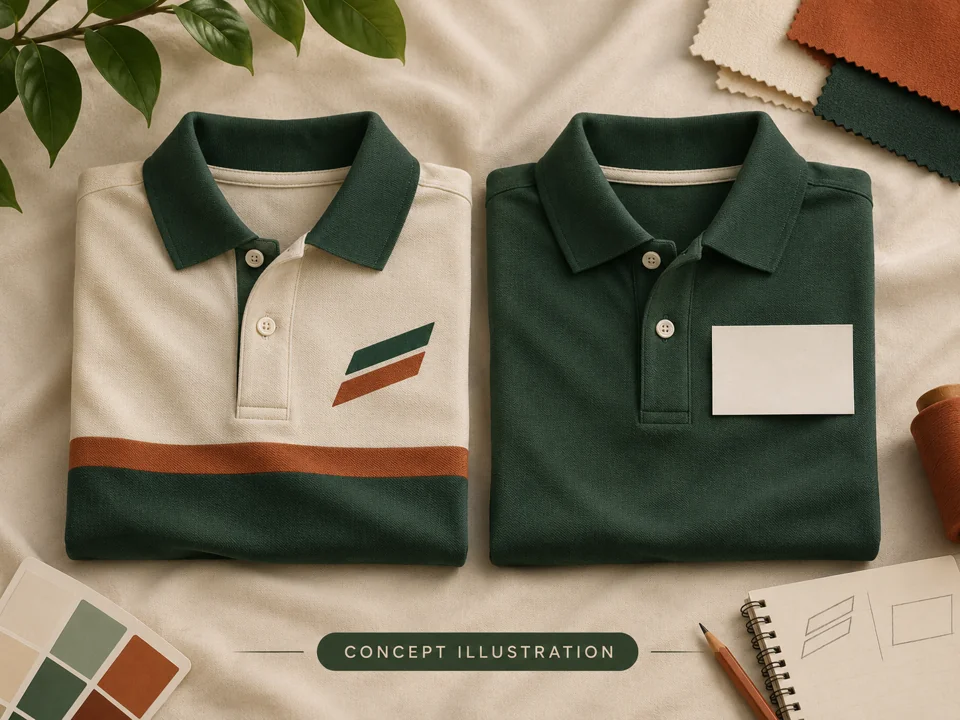
Identify what is already on the shirt
Photograph the outside and inside near the old logo. Explain whether it is an applied print, stitched mark, sewn patch or a pattern that appears to be in the fabric. If you are not sure, send the photographs and original garment information instead of naming a method. The treatment can affect thickness and how much of the original image remains visible underneath a proposed new mark. Record whether all garments in the group use the same model, colour and old design. A branch might have an earlier uniform with a different chest size or a second supplier's trim. A plan that fits one example does not settle the other. Note wear, lifted corners, unevenness, holes or marks near the print. Put anything materially different in a separate group before asking the shop to assess the job.
Check the full shape that has to disappear
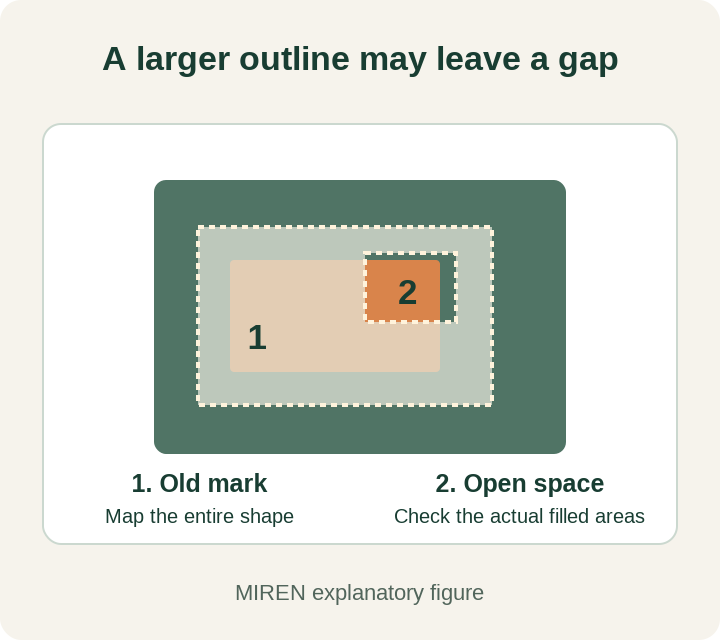
Measure the old design at its widest and tallest points. Trace an outline that includes any name line or corner outside the main logo. Then overlay the actual new design at its contemplated width. Inspect gaps between letters and any clear areas around the edges. The new outer rectangle can be larger while a portion of the old mark remains visible through a planned opening. An opaque paper template is useful for checking location. Mark the original top and bottom edges in the same photograph so another reviewer can repeat the check. Use a second template that follows the actual coverage of the new artwork, including its open shapes. Identify the exposed areas and decide if seeing them is acceptable. If the brand owner allows a background panel as part of the new mark, compare that version independently. A background change still needs design approval and assessment of how the finished area will look and feel.
Do not treat the old decoration as bare fabric
A surface that already carries a print or stitching is a different substrate from the exposed garment fabric. The older mark can have height, ridges, lifted areas or a different surface. Its condition is also uneven across pieces that have been washed or worn differently. Show those details to the print provider and ask which unanswered questions require a physical garment. A paper fit check cannot address them. If the existing decoration is a raised patch or embroidery, show the edge and reverse of the work. Ask whether the proposed new location is on clear fabric and what distance it keeps from seams. Avoid preparing the full batch by trying to remove old marks yourself. Removal can alter the surface or leave a visible outline. Discuss options and get approval before altering a shirt you rely on for daily work.
Compare relocation, assessment and replacement
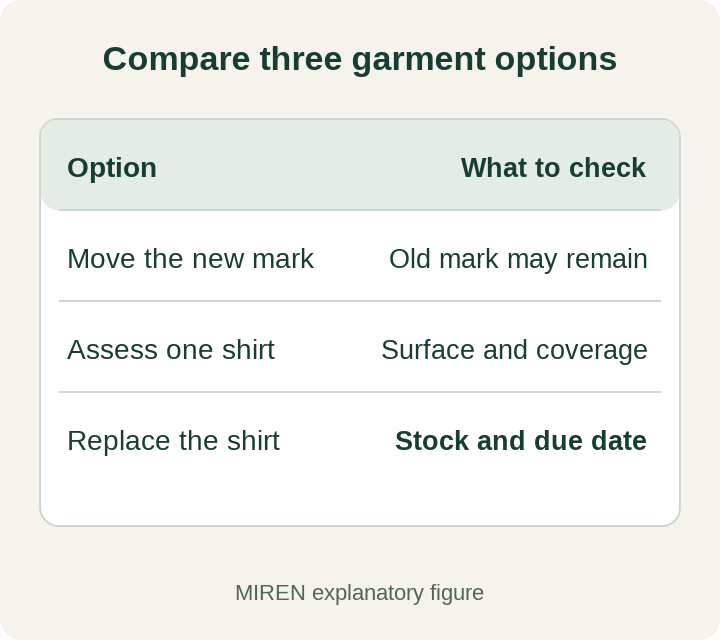
Look for a clean area first if both marks are allowed on the garment or the old area can be handled separately under the brand policy. A sleeve or other chest area could hold a new local mark, subject to garment and placement review. This choice preserves the original area, so decide whether staff may still be seen with the old logo. Some launches require the old mark to be absent even if there is room for a new one. If the old mark must be hidden and the shirt is otherwise suitable, ask about assessment on one representative piece before drawing conclusions. Agree what a successful sample would need to show. If hiding both outline and texture is essential, or the shirt varies too much across the batch, compare replacing the garment and recycling or retiring the old one under your own policy.
| Option | What to settle |
|---|---|
| Move to a clean panel | Whether the old logo can remain |
| Assess representative shirt | Coverage, surface and approval |
| Replace the garment | Availability and due date |
Walk through an example with a visible gap
Imagine the old logo is 7 cm wide by 3 cm high and the buyer proposes a new 8 by 4 cm outline. On paper the rectangle can enclose the old dimensions when carefully centred. The upper corner of the original mark sits beneath a transparent opening in the new artwork, so that part can still show. The team can either approve a different graphic, choose a clean placement with a documented old-mark policy, or compare a replacement shirt. If the redesigned panel covers the old graphic on paper, agree what else to assess on an actual sample, such as whether any ridge remains visible from the front or whether the place feels substantially different in wear. The numerical example is about shape coverage only. It does not prescribe a print margin and it does not establish what MIREN can produce on an existing decoration.
Get a decision before committing the usable stock
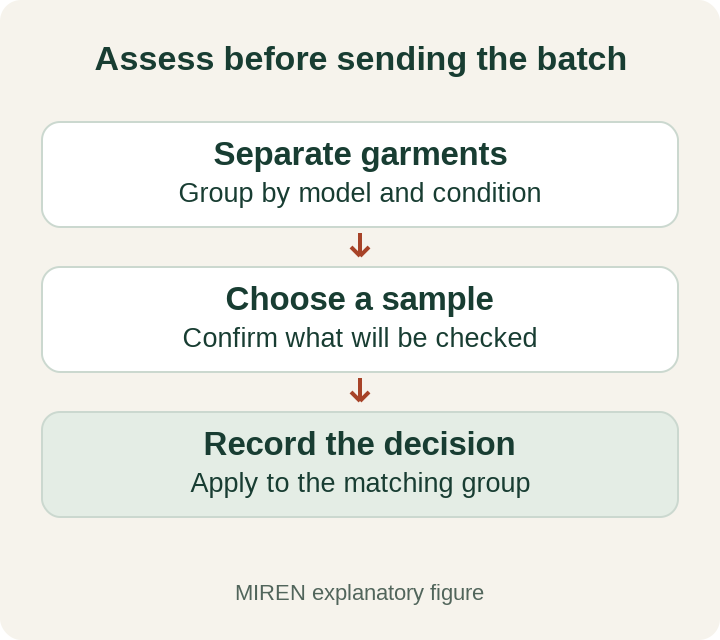
Let the print provider know if you can supply one shirt as a representative piece and identify which group it represents. Send the clean garment images, label, close views of the mark and the approved alternative artwork. Agree what testing or assessment could change the sample permanently and who can authorise the use. A purchased uniform may belong to the company or the individual wearing it, so check internally first. After an agreed assessment, ask for the observation, decision and garment group in writing. If further assessment is needed for a second model or condition, keep that group out of the committed total. Hold finished or worn items separately from unissued spares so each group can follow the owner's treatment decision.
When the first example is from unissued stock, compare it with a worn item before booking an assessment for the used group. Both might have the same label and artwork yet present noticeably different surfaces. Take the photos in comparable light and show the same edge. If the work has to be reviewed by a brand manager and a uniform supplier, label the images with the group rather than the employee's name. A simple status such as original inspected, assessment proposed, or alternative approved helps the buyer understand how many garments are actually under consideration at each step.
Compare outcomes without assuming that rework is cheaper
The options require different work. A new blank may have an immediate procurement cost. An existing shirt might require checking, sorting, transport, a representative assessment and an approval decision before the order is possible. List the cost and time elements for your buyer without assigning a hypothetical price. Ask providers for relevant quotations only after they understand the actual garment and design. Give the team a date when it will choose between the assessed options. If a launch deadline is fixed, record what stock could be used while waiting and when a replacement garment must be ordered to meet the date. A plan is more robust when the buyer has a clear option if the existing shirts cannot be reused as intended.
Send the original mark and the proposed artwork together
Contact MIREN for a DTF assessment with the garment model, label, stock group counts and photos of both sides of the existing mark. Include the old dimensions, the new design and intended location, whether the old mark must be completely hidden and the date staff need the uniforms. MIREN's DTF order minimum is 15 pieces. Discuss what can be assessed before bringing or committing a full batch.
Before you contact a printer
- Identify the old decoration and group different models or conditions.
- Check the actual filled shape of the new artwork against the old mark.
- Agree whether the old mark can remain visible.
- Ask what assessment is appropriate for a representative piece.
- Compare any rework decision with a clear-placement or replacement option.
Frequently asked questions
If the new logo is wider, will it hide the old logo?
Compare its actual filled areas, not only its outer box. Open gaps and the physical condition of the old mark need separate checks.
Should I remove the old print first?
Send the shop photos and agree on what needs doing before altering any shirt. Removal may change the surface and the assessment.
Can I bring all the shirts for overprinting?
Start with the exact model and photos. Ask how a representative piece can be assessed and only commit the remaining group once the option is confirmed.