
Printing Shirt Names and Numbers: Prepare a Clear Roster
Match printed names and numbers to garment sizes, colours and teams. Check spelling, leading zeroes and layout before approving a personalised DTF order.
Use one row per wearer to connect the exact printed name, number, size, shirt colour and team. Check the actual wording against placement references before approval. MIREN provides DTF names and numbers at an additional charge, with orders starting at 15 pieces.
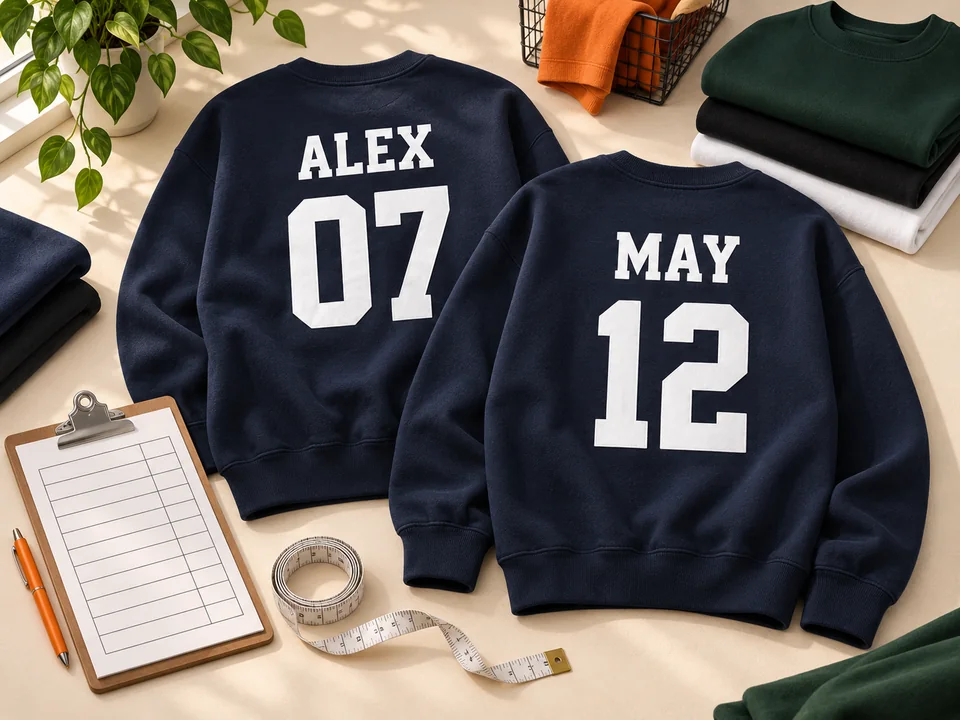
Maintain one master list for the whole order
Start with a unique person or item code. Separate the printed name from the contact name because a wearer may prefer a nickname. Put size, colour, team and quantity on the same row so each shirt has a clear intended recipient.
If someone needs several shirts, state the quantity or separate rows for different garments. Update the roster instead of replacing it with scattered chat messages; the quantity coordinator and artwork reviewer need the same version.
| Field | Illustrative entry | Check |
|---|---|---|
| Item code | A01 | Unique wearer or garment record |
| Printed name | ALEX | Approved spelling and capitalisation |
| Number | 07 | Text format retains leading zero |
| Garment | Model / colour / size / quantity | Matches garment allocation |
| Status | Pending / approved | Confirmed by wearer or approver |
Check spelling, language and leading zeroes
Ask each wearer for the exact wording and language. Names that sound alike can have different spellings. Obtain confirmation rather than having an organiser transliterate a name on someone else’s behalf.
Store numbers such as 01 and 07 as text, then check the exported file. Some spreadsheet settings remove the leading zero. If two people share a number, ask the organiser to confirm whether that is intentional before preparing the artwork.
Apply a consistent rule to long and short names
Show the name and number positions with intended width or height. Decide how a long name should fit: smaller letters, a different arrangement or an approved abbreviation. Review the longest name alongside a short example before agreeing the layout.
Compare proportions on small and large garments, including pockets, seams and possible obstructions. A Polo requires assessment of its actual print position rather than automatically copying the dimensions from a T-shirt reference.
Approve artwork against the garment allocation
Review each code individually, not just the team overview. An attractive mockup can still pair the wrong name with a size. Match wording against the master roster and reconcile the total with the shirt quantities.
Consolidate corrections into one version with a filename, date and approver. Identify exactly which rows change name, number or size. That record makes it possible to establish which information was approved.
Separate shared artwork from individual additions
A company logo repeated on every shirt is a different element from an individual back name or number. Include both, together with positions and dimensions, in the initial quotation brief. MIREN charges additionally for names and numbers.
MIREN runs DTF equipment in Nonthaburi and sources suitable ready-made garments. Orders and repeat orders start at 15 pieces. Retain the garment code and approved files if future members may need the same design.
Supply the roster and its supporting files together
Attach the roster, logo file and name-and-number placement reference. Use one contact to consolidate members’ corrections so the production team receives an agreed instruction set.
Open the exported file yourself before sending it. Verify the language, leading zeroes, row count and total quantities. Mark outstanding confirmations explicitly rather than leaving a blank that could be interpreted as an instruction to omit the print.
Before you contact a printer
- Unique wearer or garment codes
- Exact printed names and text-formatted numbers
- Garment model, colour, size and quantity
- Placement and longest-name example
- Roster approver and required receipt date
Frequently asked questions
Can Thai and English names be considered?
Send the exact wording and reference artwork for lettering assessment. Approve spelling and styling before production confirmation.
Should the roster use one row per person?
Yes, or one row per distinct garment item, so printed name, number, size, colour and quantity stay connected.
Should long names be shortened first?
Ask the wearer to approve a full name, nickname or abbreviation, then review its layout before choosing letter dimensions.
Why did number 07 become 7?
The file may have treated the entry as a numeric value. Store it as text and inspect the exported file for the leading zero.
Are names and numbers included with the shared logo?
They carry an additional charge. Supply the full roster at quotation stage so the extra scope is assessed with the main logo.
What is needed for new members later?
Provide the previous order reference, garment model and new name–number–size allocation. Reorders start at 15 pieces and stock is checked again.