
How to run a laundry trial for DTF-printed staff shirts
Use care labels and confirmed print guidance to agree on a small laundry trial. Compare condition, fit and artwork before sending the entire uniform batch.
Before handing over all your printed staff shirts, ask the laundry to follow the confirmed instructions for the exact garment and print. Record a few representative shirts before washing, then compare their fit, fabric and artwork after the agreed process. Keep a matching unwashed reference where possible. The purpose is to check whether your proposed routine works for these shirts under your own conditions.
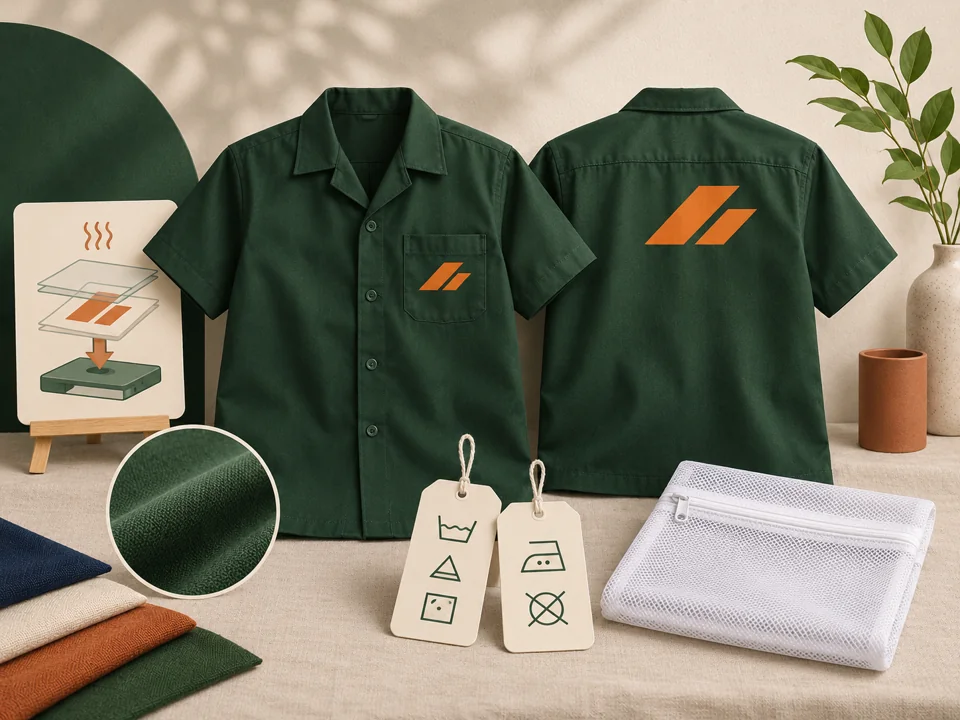
Define the routine before sending a full staff batch
A company may wash uniforms centrally, use a local laundry partner or allow each location to arrange its own service. Find out who handles the garments, where they go and how the laundry identifies each group. A routine that varies by branch needs separate confirmation before the same decision is applied everywhere. Start with the group you expect to wash together and the work clothes it will actually include. Agree what you want to learn. Depending on the business, the question may be whether the shirts come back with readable logos, whether their fit changes, or how to catch inconsistent finishing between locations. Make the checks practical for the person collecting the uniforms. A small trial is useful when it leads to a decision and gives the laundry clear instructions for repeat visits.
Read the garment label and the print guidance together
Photograph the care label of the exact shirt and keep the print supplier's guidance with it. Check washing, drying and any finishing the laundry normally offers. The garment label and the decoration guidance may address different parts of the item. GINETEX explains what the wash, drying and ironing symbols indicate. A symbol tells the laundry which method is allowed for that garment label; the printing supplier can clarify what to do with the decoration on the finished shirt. If the guidance seems incomplete or the proposed cycle conflicts with one of the instructions, pause and ask the supplier and laundry to confirm a compatible process before testing. Ask what remains in the routine after washing, since drying or pressing can also change the garment's appearance. Keep the information with the exact model and print rather than applying it to another garment that looks similar.
Build a small comparison group with a reference
Choose a representative printed shirt from each relevant model or fabric group. If the shirts use very different print sizes, include examples that show those differences. Before the trial, record the colour, model, artwork and the places where the print touches a seam or changes from a thin to a broad area. Photograph the shirt flat in reasonable light and note any issue already present. Keep one similar unworn and unwashed shirt from the same order if you can. It can show whether a paint-like edge or a small wrinkle was already present. If only one shirt is available, take enough before photos and notes to make a fair comparison. A test garment can come back changed. Use a sample that your team has authorised for that purpose.
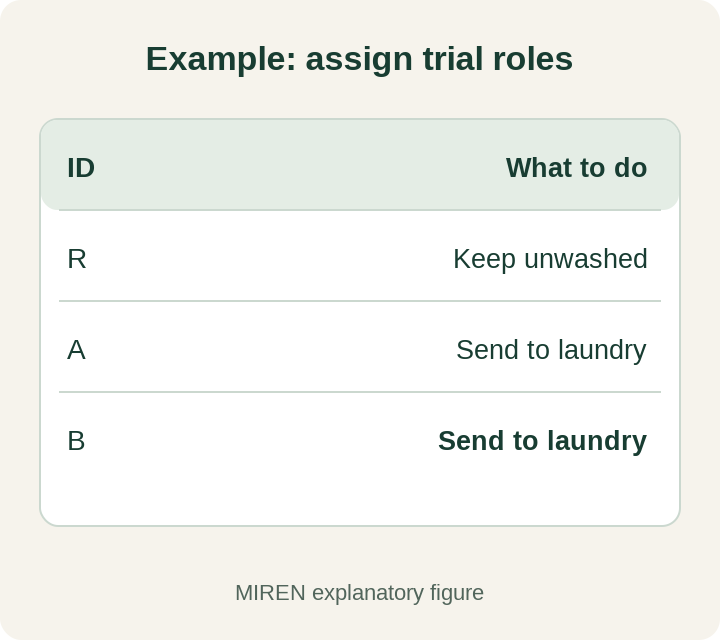
Ask the laundry to run the process it can repeat
Give the laundry the confirmed instructions, the trial identifiers and a contact for questions. Ask it to tell you which process it followed and whether it changed anything after receiving the garments. One useful approach is to keep the group together, label it as a trial and tell staff not to add it to the ordinary batch until they have read the instructions. If the laundry has two possible compatible routines and you want to compare them, agree the question before trying either. Change one thing at a time when feasible so the observation can help you choose. Record what was actually done, including the drying or finishing method, and note interruptions. A later reference to “normal wash” is hard to reproduce when more than one machine or service is used.
Label the garment through a method that the laundry confirms will stay readable and is suitable for the item. Tell it which pieces are the trial group and which should remain with the buyer as references. A simple receipt with the garment identifiers and quantity can prevent a reference shirt being added to the wash in error. Ask the laundry to return the trial group together. If the pieces go through different finishing steps, ask it to note which one received which process. That record makes a follow-up conversation possible even if the usual manager was not present at intake.
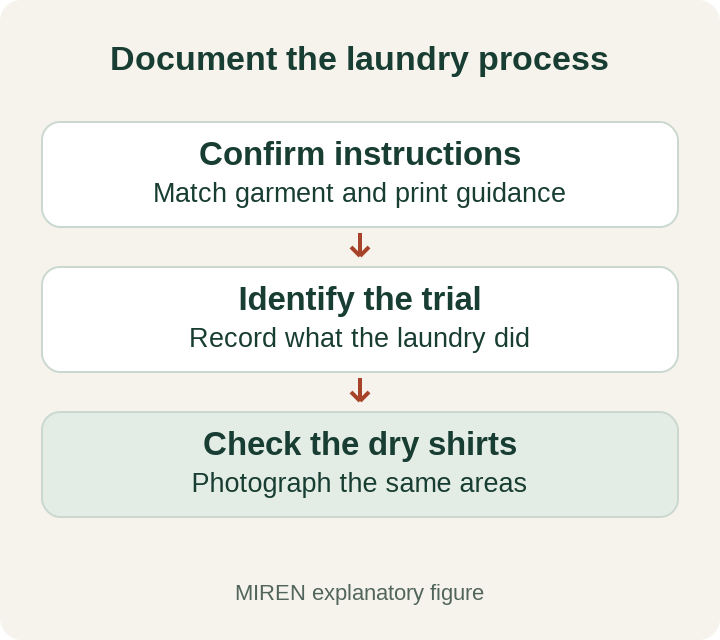
Compare the shirt and the artwork after it returns
Once the trial shirts are dry and ready to wear, lay them flat as you did before washing. Compare the model, colour, fit and artwork with the reference and your photos. Check a consistent place, such as the bottom edge of a logo and a slim line inside it. Record any lifted edge, change in shape or new damage, and photograph the same area under similar light. Ask someone who uses that shirt to compare how it feels after the process if fit or handle matters. Write observations in specific terms. A note that says “lower right corner lifts on the trial shirt” is easier to review than “the print is bad”. Share what you observed with the laundry and print supplier before assigning a cause, especially if the shirt or its care instructions were not from the same model.
Put the unwashed reference and each trial shirt in the same position before taking a comparison photo. Use the same view of the hem and print so a changed angle does not look like a changed shape. If you measure a dimension, use the same points and the same laid-flat method both times. Name the image by shirt identifier and date.
Use a fictional three-shirt trial to record a decision
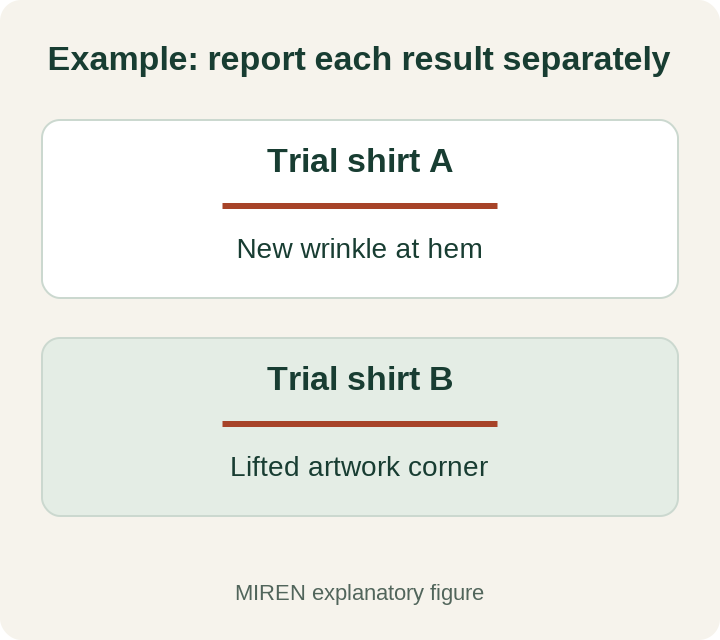
Suppose a business keeps three navy printed tees of the same model for comparison. It sets aside one as a reference and sends two through an agreed routine. Both come back with a readable mark. One has a new wrinkle at the hem and the other shows a lifted artwork corner, so the buyer keeps those observations separate and asks the laundry what happened to each piece. The business holds the remainder while it reviews the affected samples with the suppliers and confirms a next action. Even if both shirts had returned without visible differences, that result would describe the trial's conditions and samples. A trial still gives the buyer a way to decide what to record, whether to run a follow-up and when to release the rest of the batch.
| Shirt | Role | Observation |
|---|---|---|
| R | Unwashed reference | Used for comparison |
| A | Trial | New hem wrinkle |
| B | Trial | Lifted artwork corner |
Pass on the agreed rules to every site involved
Write a short instruction for the people sorting the uniforms: which models can go in the agreed process, how to identify different groups, what to do with unknown care labels and who should review any change. If the laundry changes supplier, process or location, confirm that the record still applies. A staff shirt printed next season might also have a different garment label even when the design is unchanged. Keep the approved routine next to the order record and the photos used for the comparison. Ask each branch to use it before making local workarounds. During the first full run, collect any observations that differ from the trial and stop routing affected garments through the same process if an unresolved issue appears.
Ask MIREN about the garment and print before the trial
For an existing MIREN order, give the model and order reference and identify the design and laundry question. For a new job, tell us if the shirts will be washed by a central service and share the garment model and how staff use it. Ask about the care guidance applicable to that order. MIREN accepts DTF shirt orders from 15 pieces. A laundry trial is arranged by the team handling the uniforms.
Before you contact a printer
- Confirm what the garment label and print supplier allow.
- Choose representative trial shirts and save a reference.
- Record the actual wash, drying and finishing process.
- Examine the same areas before and after.
- Write the agreed routine separately for any different garment groups.
Frequently asked questions
Can the laundry use its usual process for printed uniforms?
Compare that process with the real garment label and the confirmed print-care guidance. Agree a small representative trial before deciding on the full batch.
How many washing cycles show that a shirt will last?
This guide does not set a durability test or a cycle target. A workplace trial tells you what you observed under the process and conditions you recorded.
What if only one test shirt is available?
Save before pictures and notes on the actual garment. Record the care process and compare the same areas when the shirt is dry.