
Staff shirts do not fit after handout: how to resolve size exchanges
Check whether the wrong item was issued, the correct size fits poorly or the delivery differs. A worked example shows how to separate exchanges and shortages.
When a staff shirt does not fit, compare its label and model with the approved size record before proposing an exchange. A shirt issued to the wrong person, a correctly issued shirt with poor fit, and an item that differs from the purchase each need a different response. Keep the affected garments identifiable, use approved spare stock when suitable, and contact the supplier with evidence if the received item differs from the order.

Stop the mismatch spreading during handout
Give staff a designated way to report the problem, especially when several branches are distributing uniforms at the same time. Ask for the garment model, colour, label size and what they expected to receive. Note whether it has been worn, washed or personalised so the person who controls stock can decide how to handle it. Keep individual fit questions out of public staff threads when there is a private channel. Ask the branch to set aside affected garments until the records are compared. A swap between two employees may be convenient but can leave the central list showing two incorrect allocations. Update the record when a swap is authorised. Also note the date the staff member needs the correct shirt, so the manager can plan any temporary arrangement if the replacement will take time.
Sort reports by the record that differs
Read the order and issue lists in order. First see what the employee had confirmed. Then see what the branch assigned and what the label says. If the receiving record shows the buyer got what it ordered, but the employee was handed a different row, resolve the issue internally. If the label and cut match the approved choice but the fit is unsuitable, review the person's preferred size for that model. The remaining case is a garment that differs from the agreed delivery or a missing size in the purchase. Keep that row and any physical evidence for the buyer. It may need supplier review, rather than a transfer between two branches. If the label itself appears inconsistent, photograph the model references, garment and measurements and ask the buyer or supplier to verify before redistributing it.
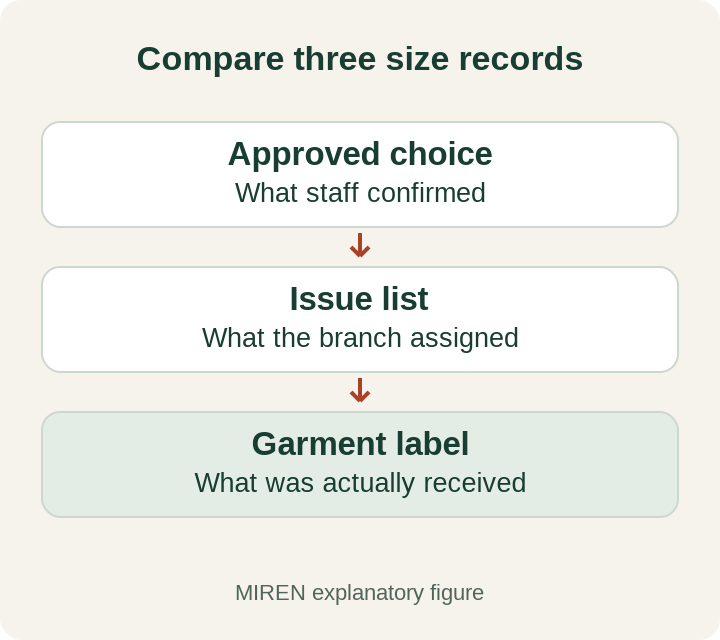
Confirm a different size in the same model
Use the garment supplier's chart and an available sample or agreed measuring method. A label change from medium to large may resolve a concern in a single cut, but a large shirt from another model describes a different garment. Ask what the employee needs, such as more room at the shoulders or a different length. When possible, arrange for the employee to try the replacement before it is allocated. Keep only the clothing information needed for the exchange. The branch order file can record the old label and the confirmed replacement label, along with who will arrange the handoff. If the new choice requires another cut or colour, have a responsible person approve it because it changes the original staff uniform specification.
Check which replacement pieces are free to issue
Look for an unassigned piece of the exact model, colour, artwork and confirmed size. Count only garments that have been cleared for use under your uniform rules. A spare with a different logo version, an individual name or a reserved recipient may be unsuitable. Ask a supervisor whether a shirt at another site is free before offering it to someone. Update both records when a transfer is agreed. Record what happens to the original piece. The branch may set it aside until the condition and any personalisation are checked. Log the replacement as allocated and only return the original to available stock once your team has approved it for reissue. This avoids promising an item that has been held already or assuming a returned shirt can go straight back into the reserve.
Where branches share stock, agree a short hold period while the employee tries the potential replacement. Mark the piece as held and give the reservation an expiry or a next action. A shirt listed as free while a trial fitting is pending may be promised twice. If the employee decides against it, clear the hold and tell the branch that owns it. This distinction matters particularly when the only remaining shirt in a common size is already travelling between locations and the central system has not yet recorded its arrival.
Reconcile six hypothetical reports
Suppose the buyer gets six reports after distribution. Two staff were handed the wrong shirts, and the branch can correct both allocations using the original confirmed rows. Three others received the garments they selected but request a different fit. Two can take approved stock in the right model and size after trying it. The last one remains open because the correct replacement is unavailable. The sixth report concerns a label that differs from the approved order line. The buyer records it separately with the supplier reference rather than counting it as an internal size exchange. The status at that point is four resolved internally, one waiting for a replacement decision and one awaiting supplier review. The total remains six. These counts describe a workflow, not a rule about how a supplier must resolve an order.
| Case type | Reports | Status |
|---|---|---|
| Incorrect handout | 2 | Resolved internally |
| Correct shirts, poor fit | 3 | 2 resolved, 1 pending |
| Possible supplier difference | 1 | Awaiting review |
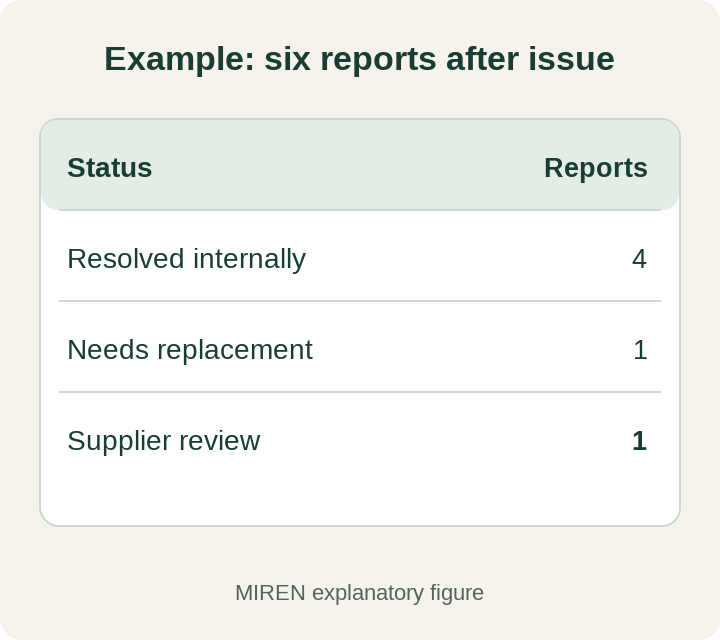
Give purchasing evidence for a possible delivery difference
Provide the order reference, model, colour, expected size and actual label. Record the carton when known, and attach a clear picture of the label and item. Use your receiving and approval documents to identify the exact row. Tell the supplier when the garments are needed and which pieces are held aside. Ask what will be checked and what the next communication should contain. If the shirt carries a name or number, mention it in the issue record as needed and ask about applicable terms. Avoid committing to a return, replacement or credit before the purchase terms and situation have been reviewed. A buyer can still take practical steps, such as holding affected stock and asking who should review the case.
Update counts before deciding on another order
When a case closes, mark which garment the person now has and whether the original can be reused. Keep details per model and size rather than reporting only how many exchanges occurred. An overall reserve count can look healthy while the size that people now request has run out. If a branch has genuine shortage after transfers and rechecks, send the remaining quantities to the buyer together with the latest uniform specification. Separate a request for additional matching shirts from the review of a possible delivery issue. MIREN's new DTF orders start at 15 pieces, including repeat orders. If staff need fewer, ask how the buyer wants to plan around existing stock and the next replenishment. Record the revised timeline internally so staff know when they will hear about the next step.
Give the buyer the running list of open cases before deciding whether to replenish this size. A dated entry that says “one navy polo L still needed, with the new logo version” is more actionable than a total for the whole programme. If another employee may also need a replacement, confirm that choice separately so the replenishment request reflects known quantities. Keep the complete case list internally so the same shortage does not get added again when a different branch reports it.
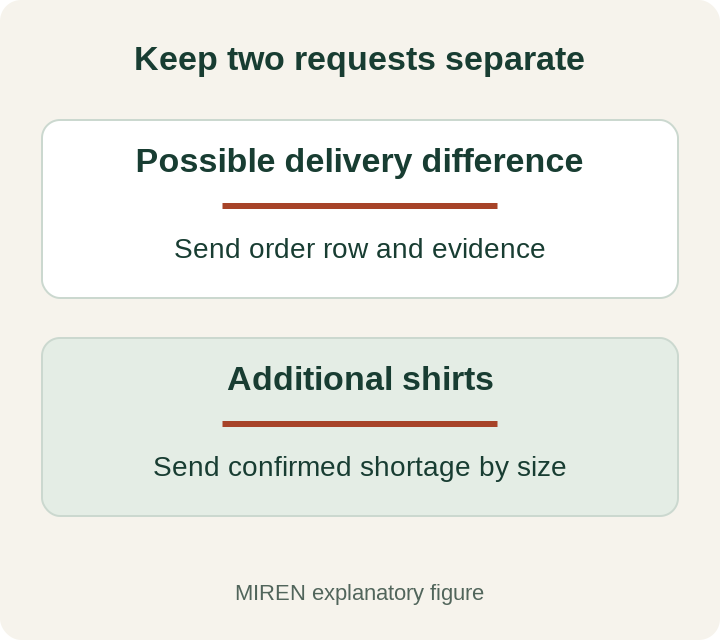
Send MIREN the order facts and the action you need
For a question about an existing order, provide the order reference and the exact garment row, then explain the mismatch and attach photos where helpful. For an order for additional uniforms, send the current model, colour, size counts and approved artwork reference. Clarify if the garments are replacing old shirts or increasing stock. Keeping those purposes separate helps the shop answer the right request.
Before you contact a printer
- Compare the staff choice, issue list and garment label.
- Separate an internal handout problem from a delivery discrepancy.
- Verify replacement fit and whether spare stock is free to issue.
- Document carton, model and labels where the supplier needs evidence.
- Update the stock record and close every case with a clear status.
Frequently asked questions
Can staff simply exchange the shirts with each other?
Ask the uniform coordinator to check the model, artwork and condition, then update both allocations if the exchange is approved.
What if the label matches the order but the shirt fits differently than expected?
Compare with an exact-model sample or size information and confirm the replacement preference. A complaint about fit and a delivery discrepancy require different records.
What should I send if the supplier may have delivered the wrong size?
Identify the order row and show the expected size, actual label, garment model and carton if known. Ask the supplier to review the specific case and relevant terms.