
DTF vs DTG: Compare the Same Shirt and Artwork Before Ordering
Compare DTF and DTG by print workflow, garment, design coverage and order brief. A practical guide for choosing custom staff and team shirts in Thailand.
DTF transfers a design from film onto the garment with heat; DTG prints directly onto prepared fabric. Start with the shirt, artwork and desired feel, then compare the methods. MIREN provides in-house DTF printing in Nonthaburi with a 15-piece minimum.
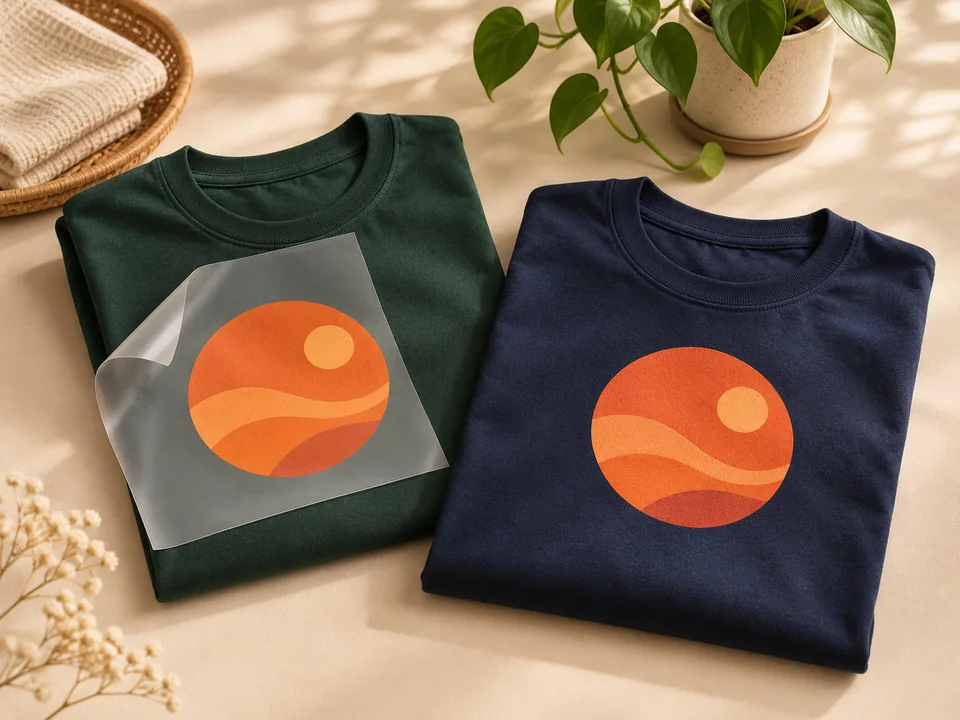
What changes between DTF and DTG?
Direct to Film and Direct to Garment describe how the image reaches the shirt. They are process names rather than quality grades. A DTF design is printed on film before transfer, while a DTG printer applies the image directly to a prepared garment.
For a buyer, the useful follow-up is how that workflow suits the actual shirt and design. Ask about the area covered by ink, the intended feel and the garment reference. A small image on a phone can communicate the concept, but it says little about the feel of a full-size design.
Use the same fabric reference when comparing
DTG is commonly associated with cotton. DTF can accommodate a wider range of fabrics, subject to the material and application. MIREN has worked with cotton and polyester, including black, white and blue shirts; each proposed garment still needs assessment.
Describe how the shirt will be worn: an air-conditioned reception desk, a walking event or a full staff shift. Fabric selection and print coverage belong in the same conversation. Comparing different garments can obscure what is actually caused by the printing method.
A practical comparison checklist
Hold the artwork, garment and dimensions constant when asking different suppliers. This table identifies useful questions rather than naming a universal winner.
| Decision | DTF | DTG |
|---|---|---|
| Image application | Transfer from film to garment | Print directly onto prepared fabric |
| Fabric assessment | Check the actual material, surface and colour | Often cotton; preparation matters |
| Feel | Transferred image layer on the fabric | Depends on ink, preparation and coverage |
| Brief to supply | Garment, file, dimensions and position | Garment, file, dimensions and position |
Assess a chest logo and a large back design separately
A compact chest emblem covers less fabric than a solid back panel. Make the decision at the intended print size. Reviewing the design’s open areas can help you discuss coverage without redesigning the brand identity.
Supply separate front and back references, with width or height in centimetres. For small lettering, include the actual text and original artwork. A reduced chat image is useful context, but the production assessment needs the best available file.
Compare DTF and DTG using the same garment and artwork. As an example, assess an 8 cm chest logo and a separate 24 cm solid back design. Check lettering at actual size and feel the solid area of each sample before choosing a method.
Compare equivalent quotations
Ask suppliers to quote the same garment, size allocation, design dimensions and print positions. An order total also reflects garment sourcing, artwork work and additions. Record what is included instead of treating the process name as a price.
MIREN quotes DTF projects individually. Names and numbers are available at an additional charge, so list them in the initial brief. If you are exploring DTG, give a provider of that service the same information so its proposal addresses the same job.
Give each shop the same garment model, artwork, print dimensions and quantities. Ask them to itemise the garments, printing and delivery so you can compare equivalent quotes.
Describe the job you want to achieve
A useful brief identifies a black staff shirt, chest and back artwork, quantities by size, the wearing context and the required receipt date. That allows stock and design suitability to be assessed together.
MIREN sources ready-made garments and prints DTF with its own equipment in Nonthaburi. Send the artwork you have and a garment reference through the contact page to begin an assessment of the design, order scope and dispatch plan.
Before you contact a printer
- Garment model and fabric information
- Size quantities totalling at least 15 pieces
- Front and back files with dimensions
- Required receipt date and destination
Frequently asked questions
Is DTF or DTG better?
The choice depends on garment, artwork, print coverage and desired feel. Compare the same shirt and design, then discuss the result you need.
Can polyester be considered for DTF?
Yes. MIREN has printed polyester garments, and can assess the proposed model, colour and surface before confirming the job.
Does full-colour artwork require DTG?
DTF is also an option for multicolour artwork. Supply the actual file and print dimensions so fine details can be reviewed.
Why review a back design at actual size?
Coverage changes the proportions and feel of the printed area. Add centimetre dimensions to the visual reference.
Does MIREN offer DTG?
MIREN currently provides DTF. DTG is discussed here as a comparison to help buyers choose an appropriate method.
What is needed for a DTF quotation?
Send the garment reference, colour, quantities by size, original artwork, dimensions, print positions and required receipt date. The minimum is 15 pieces.