
What is DTF shirt printing?
What is DTF printing? Compare DTF with DTG, choose shirt fabric and print size, and prepare artwork for an order from 15 pieces.
Direct-to-film printing uses heat and pressure to transfer a design from printed film to a shirt. Consider it for multicolour logos and detailed artwork, then check the fabric and actual print size.
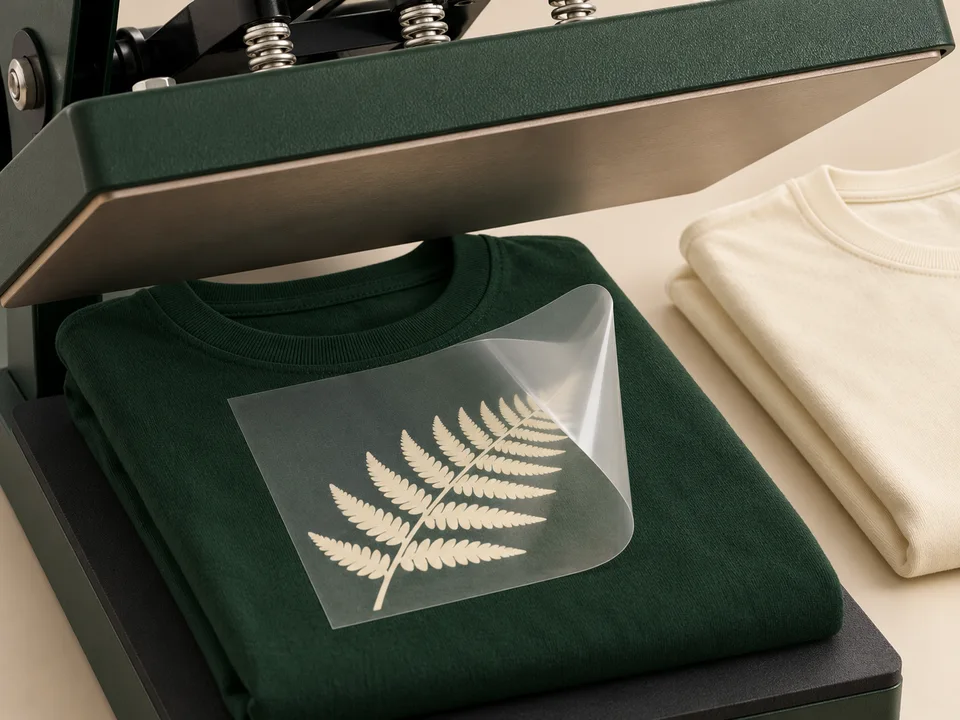
How DTF shirt printing works
DTF stands for direct-to-film. A design is printed onto film, coated with adhesive powder and heated. A heat press transfers the prepared design onto the shirt. The film, powder and garment determine the peeling and finishing steps.
For a buyer, the useful starting point is a defined job: the shirt model, each print position, the size of each design and the approved file. Keeping those details together makes the quotation and the proof easier to compare.
Which shirt and colour should you choose?
MIREN has printed DTF designs on cotton and polyester shirts in black, white and blue. For blends, coated fabrics or a different model, send the garment reference and composition label so suitability can be assessed.
Begin with how the shirt will be worn. All-day staff clothing, a polo for meeting customers and an event T-shirt can need different cuts and fabrics. Share the model or a garment photograph and the composition label, including whether it is cotton, polyester or a blend.
Manufacturer guidance describes DTF use across a range of textiles. The fibre name alone does not confirm the result on a particular shirt. Surface finish, coatings, seams and the area being pressed also matter. Send details of unusual or slippery fabrics before buying the whole batch.
On dark shirts, check whether outlines and fine lettering remain distinct from the garment. On pale shirts, review white elements and any background in the file. Approve the design against the actual proposed shirt colour.
Benefits and limits to consider when sizing a logo
DTF provides a film-based route for applying a logo to a garment. Send the full artwork early, especially when it includes multiple colours or small details. A sharp image on a screen is only one part of choosing the print.
A small chest logo covers a different area from a solid back design. That coverage affects the feel of the printed area. For shirts worn throughout a shift, compare chest-only and chest-and-back layouts and consider how far away the wording needs to be read.
Check fine lines, small letters and gaps at the intended output size. Enlarging a small original can leave unclear edges. Send your best file and dimensions in centimetres so the proof can be assessed against the real brief.
How DTF differs from DTG
The main difference is where the ink is printed. DTF prints onto film before transfer; DTG prints directly onto the garment. Use the comparison to ask for relevant samples and specifications.
| Question | DTF | DTG |
|---|---|---|
| How does the design reach the shirt? | Printed film is heat-transferred onto the garment | Ink is printed directly onto the garment |
| What needs checking? | Film, powder, fabric and pressing area | Garment material and any pre-treatment |
| What should a sample show? | Edges, fine letters and the feel of solid print areas | Colour, detail and feel on the intended garment |
Check the proof before you approve it
Identify the front, back or sleeve and define left and right from the wearer's perspective. Include dimensions and a placement reference such as the neckline. For an order spanning several sizes, ask how the print fits the smallest shirt.
Confirm spelling, garment colour, placement and filename together. If several colleagues request changes, appoint one person to collect them and approve a final version.
Care for the print and prepare a quote request
Follow the garment care label alongside instructions for the print. Epson recommends washing printed shirts inside out in cold water. Avoid placing a hot iron directly on the design; the appropriate routine depends on the garment and how it is used.
MIREN PRINT uses its own DTF equipment in Nonthaburi. Orders start at 15 pieces. Send your logo, shirt reference, quantities by size, print positions and required date on LINE for an individual quotation.
Before you contact a printer
- Original artwork
- Print size and placement
- Garment model, colour and fabric
Frequently asked questions
What is the difference between DTF and DTG?
DTF prints on film before transferring the design with heat. DTG prints ink directly onto the garment. Compare samples using the shirt model you intend to order.
Which file should I send for a quote?
Send the best original logo file you have, with print width, placement and shirt colour. If you only have a small image, have its clarity assessed before confirming the job.
What is the minimum DTF order?
MIREN PRINT accepts orders from 15 pieces, including repeat orders.
How many washes will a DTF print last?
The result depends on the fabric, print and washing routine. Ask for care instructions for the particular job, especially if shirts will be commercially laundered.
Can a mock-up replace the logo file?
A mock-up helps communicate size and position. Send the original logo separately so its detail can be checked before production is confirmed.
Can MIREN print on black shirts?
MIREN has printed DTF on black, white and blue shirts, including cotton and polyester. Send the actual shirt reference and artwork for confirmation.