
DTF vs Screen Printing for Team Shirt Orders
Compare DTF and screen printing by design colours, quantities, variations and print coverage. Build an equivalent brief before comparing quotations.
DTF transfers a digitally printed image from film, while screen printing applies ink through a prepared screen. Design colours, repeated quantities and variations all affect the decision. Compare quotations for the same job rather than relying on a universal quantity threshold.
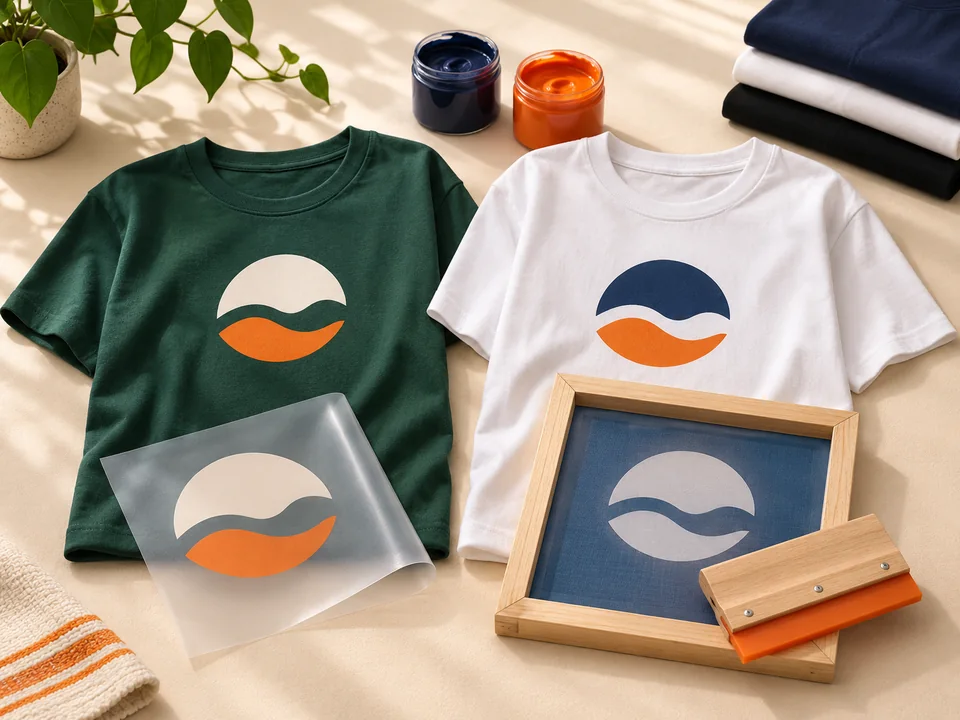
Compare the production workflow behind the label
Conventional spot-colour screen printing uses a screen for each colour. DTF starts with a digitally printed transfer. A simple repeated logo and a shaded illustration therefore raise different preparation questions, even when the shirt quantities match.
When a supplier uses the broad phrase shirt printing, ask which process is included. Explain whether your priority is the feel, artwork detail or managing variations across several groups. That creates a useful discussion about the actual order.
Separate flat-colour logos from complex artwork
For a one- or two-colour logo repeated across a batch, compare the proposed processes and complete order totals. For detailed shaded artwork, supply the original file so each provider can assess how the image would be prepared.
A DTF assessment also needs the final print dimensions, shirt colour and positions. Inspect small lettering and thin lines from the original artwork; a thumbnail alone cannot communicate the required detail.
Count the variations as well as the shirts
Two equally sized orders can involve very different work. One may repeat the same emblem on every shirt; another may split across teams and include individual names. Allocate quantities to each actual design before comparing proposals.
A fixed claim that one method becomes cheaper at a certain quantity ignores garment choice, artwork preparation and print positions. Ask for the total with the same inclusions on both quotations.
| Question | Information to supply | What it clarifies |
|---|---|---|
| How many colours? | Actual artwork and colour references | Process suitability |
| How many versions? | Quantity for each design variant | Preparation and grouping |
| How many positions? | Front, back or sleeve dimensions | Print scope |
| Personalisation? | Names and numbers matched to shirts | Additional individual work |
Discuss coverage at the intended size
A solid panel and a design with open areas can feel different even within the same printing process. For all-day staff use, discuss width and placement alongside the visual identity.
An example is most useful when its garment and print coverage resemble your order. The feel of a small chest emblem does not establish what a solid back graphic will be like on another fabric.
Build one quotation brief for all providers
List garment models, colours, quantities by size and quantities per artwork file. Add front and back references with centimetre dimensions. Identify which elements are common to every shirt and which change by team.
State invoicing requirements when requesting the quote. MIREN is VAT registered and can issue a Thai tax invoice with VAT added. Keep the document details with the artwork approver and order contact so the brief is easy to verify.
Request a DTF assessment from MIREN
MIREN operates its own DTF equipment in Nonthaburi, sources ready-made garments and accepts orders from 15 pieces. Screen printing is covered here as a comparison; the service offered by MIREN is DTF.
Send the best file available, quantities and garment reference. For a mixed-design order, attach a filename-to-quantity list so the proposed scope can be reviewed before confirmation.
Before you contact a printer
- Original colour files and dimensions
- Quantities per design and garment colour
- All required print positions
- Order contact and invoice details
Frequently asked questions
Are DTF and screen printing the same?
No. Screen printing applies ink through a screen; DTF transfers a printed image from film using heat.
Is screen printing always cheaper for a large order?
Compare actual totals for the same garments, artwork colours, variations and print positions. One quantity threshold cannot represent every job.
Can full-colour artwork be assessed for DTF?
Yes. Supply the original file, final dimensions and garment colour, including any fine lettering or gradients that need review.
How should multiple shirt colours be listed?
Give each garment colour its size quantities and identify the matching artwork version. This clarifies both appearance and production allocation.
Can each person have a different name?
MIREN accepts names and numbers at an additional charge. Match the personalisation list to the garment allocation.
Does MIREN provide screen printing?
MIREN currently provides DTF. DTF orders start at 15 pieces and are quoted for the actual project.