
Restaurant and Café Staff Shirts with DTF Logos
Choose staff shirts around restaurant roles, apron coverage and logo visibility. Plan laundry changes and a DTF quote from 15 pieces.
Choose restaurant and café staff shirts around staff roles, apron coverage and laundry arrangements before deciding on the logo. MIREN PRINT uses its own DTF equipment in Nonthaburi, Thailand, with a 15-piece minimum per order, including reorders. Garments are assessed and quoted for each job.
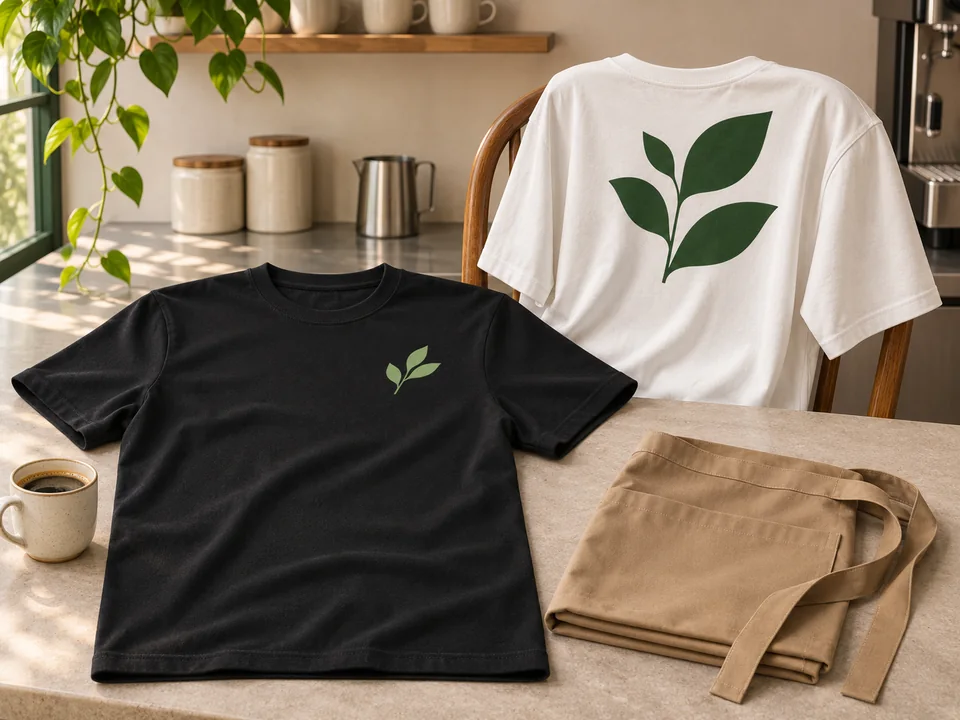
Separate front-of-house, coffee-bar and back-of-house needs
List staff roles before selecting the shirts. Hosts and servers need customers to identify them easily; baristas may wear an apron for most of a shift. Bring any back-of-house dress requirements into the same brief so fit and logo position reflect the work.
Review each role’s actual outfit, including aprons and layers. The table helps decide what customers should see and which garment areas staff can use comfortably.
| Work area | Check with the actual outfit | Effect on the print brief |
|---|---|---|
| Hosting and table service | When do customers see the front or back? | Choose a position visible during service |
| Coffee bar and cashier | What do the apron and counter cover? | Check the apron edge before placing a chest logo |
| Preparation and back-of-house | What movements and layers are involved? | Check available space, fit and movement |
| Shift manager | How should the team identify the role? | Consider a useful distinction in colour or wording |
Choose fabric, colour and a realistic laundry rotation
Consider the shift length, movement and the restaurant’s laundry routine. MIREN has printed cotton and polyester in black, white and blue. Send the model you are considering together with the artwork and position for assessment.
Compare garment colour with the brand, apron and logo contrast. Light and dark backgrounds may use different approved logo versions. Send colour and artwork together.
Hypothetical example: eight staff receiving two shirts each need 16 garments for rotation. Allocate all 16 sizes and compare the number of changes with the restaurant’s actual laundry cycle.
Keep the restaurant name visible with aprons on
For full aprons, provide front and back references of the outfit being worn. The team can review the space around apron panels and straps to choose where the restaurant name remains visible during service.
Explain the viewing distance you want, then specify the design dimensions in centimetres. A chest mark suits close conversation; back wording makes the group visible from another direction. Submit lettering details and dimensions together.
For personal barista or server names, send the actual wording matched to sizes. Shared shirts are easier to reallocate with only the restaurant logo.
Approve the restaurant name and artwork once
Collect the original logo, approved Thai or English restaurant name and colours. For multiple branches, separate the wording and identify which garments use each version.
Have one final approver check restaurant, branch and personal spelling. If adding a QR code or fine text, ask the team to assess the file at the intended size and agree how to check clarity before approval.
Keep the final artwork, placement reference, model, colour and size quantities together so a new shift manager can identify the agreed specification.
Give staff and the laundry provider the same care information
Explain whether staff wash their own shirts, the restaurant collects them or an external laundry handles them. Share the actual process so it can be reviewed alongside garment labels and print-care guidance when selecting the shirts.
Hand over the same care information to wearers and the laundry provider. Include high heat or specialist processing in the brief, and use the linked care guide for the detailed questions to resolve.
Check quantities, sizes, logo positions and names before distribution. Photograph any question and send it to the coordinator with the order reference.
Plan new-starter stock and send a complete brief
Track spare sizes for new starters and nominate someone to monitor the remaining garments. Collect repeat rounds from 15 pieces and send the earlier specification for a fresh stock check.
For an opening or uniform launch, give the ready-to-use date and destination, including the restaurant’s receiving checks and distribution time in the same plan.
Send the brief below with original artwork and an outfit reference showing the apron. This helps the quotation reflect how the staff will use the shirts.
Plan repeat orders from 15 pieces
Before you contact a printer
- Staff roles and an outfit reference showing any apron
- Garment model, colour, sizes and laundry changes
- Original logo, branch wording and final approver
- Laundry process and specific workplace requirements
- Ready-to-use date, destination and tax-invoice information
Frequently asked questions
What is the minimum for restaurant or café staff shirts?
The minimum is 15 pieces per order, including reorders. It counts actual shirts rather than employees. Provide the garment reference and quantities by size for assessment.
Where should a logo go when staff wear aprons?
Check the actual outfit from the front and back. Apron panels and straps can obscure a print. Send reference images and intended dimensions so the available area can be assessed.
Does a DTF logo make a shirt heat-protective kitchen clothing?
No. Logo printing does not establish heat-protection performance. Roles requiring specialist protective garments or equipment need a separate workplace assessment.
Can café staff shirts go to a commercial laundry?
Check the provider’s process against the garment label and print-care guidance. Explain any high heat, chemicals or specialist treatment before confirming the job; compatibility with every process should not be assumed.
Can we add individual staff names?
Yes, for an additional charge. Match the actual names or numbers to sizes and have staff check spelling before the coordinator approves the list.
How should we plan staff shirts before opening?
Give the ready-to-use date, destination and your receiving and distribution time. The typical lead time is 3–10 days from receiving artwork, depending on quantity. Have the team confirm the actual order schedule against your opening plan.